
Newsletter Subscribe
Enter your email address below and subscribe to our newsletter


This content may contain affiliate links. When you buy through these links, we may earn an affiliate commission.
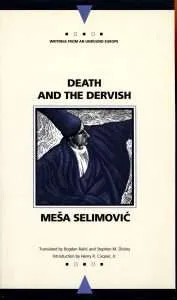
A man who has spent forty years behind the walls of a Sufi lodge, certain that the world outside is as orderly as the prayers that measure his days, receives one piece of news that unstitches everything: his innocent brother has been arrested, and no one will say why. Everything that follows in Death and the Dervish proceeds from that small tear in the fabric. Meša Selimović understood that a life of faith is often a life of untested faith, and that the cruelest thing the world can do to such a man is not to break his belief but to invite him, courteously, to act on it.
This is why the novel outlives its setting. Ottoman Bosnia in the eighteenth century is rendered with the precision of a historian, yet the book belongs beside the great interrogations of conscience in world literature, closer in spirit to Dostoevsky and Camus than to any costume drama. Its subject is not a murder or a miscarriage of justice. Its subject is the slow, appalling discovery that a good man, pressed hard enough by fear, becomes capable of the very cruelty he despises.
The structure tells you how to read the book before a single event unfolds. Death and the Dervish is divided into two parts, nine chapters and then seven, each opening with a verse from the Quran that names the chapter’s hidden theme. The final chapter returns to the verse that began the first, closing the circle so that the ending is also a beginning. This is not decoration. Sheikh Ahmed Nurudin is writing his confession in the hours before his own death, and the cyclical form insists on the terrible symmetry of what he has learned: the man who set out to save an innocent ends where the guilty always end, having become the thing he set out to oppose.
The whole novel is best understood as a trial in which the narrator is at once judge, prosecutor, and accused. He is trying to bear witness while remaining honest with himself, and the two turn out to be nearly incompatible. Every page is an argument he is having with his own memory, and the reader, drawn into the first-person voice, becomes the only witness he can no longer deceive.
Ahmed Nurudin is a sheikh with a firm foundation in faith, living according to the rules of his dervish order, convinced that the outside world lacks nothing that his certainties cannot supply. Selimović’s quiet cruelty is to give this man exactly what a devout life is supposed to want, peace, order, insulation, and then to reveal that insulation as a kind of blindness. The walls of the tekke have kept the world out, but they have also kept Ahmed from ever learning what he actually believes when belief carries a cost.
The arrest of his brother Harun is the hand that reaches through the wall. In trying to free an innocent man, Ahmed begins to feel sensations his order had promised to spare him: anxiety, unease, the specific fear of a man who suspects he is being watched. His view of the world changes, and worse, his view of himself changes with it. He recognizes, too late to be comforted by the recognition, that he has become insecure, unhappy, and shaken in the beliefs that were the whole architecture of his life. The search for inner peace that follows is the true plot of the book, and Selimović is far too honest to grant it.
Ahmed’s confession begins when Harun, a former scribe for the kadi, is imprisoned in the fortress. Harun’s only crime, we learn through Ahmed’s worldly friend Hasan, was to stumble on documents proving that the authorities executed a merchant on a manufactured confession; he was arrested to keep him silent. Ahmed moves through the machinery of the town seeking his brother’s release, the district chief, the mufti, the kadi Ajni-efendija, and meets everywhere the same cultivated evasion. The kadi dismisses Hasan’s offer to trade his inheritance for Harun’s freedom with a verse from the Quran: “Weak is the one who seeks, and weak is what is sought from him.” By the time Ahmed learns that Harun has been dead for three days, the reader understands that no one was ever going to save him.
Then the machine turns on Ahmed himself. He is beaten as a warning, imprisoned, and released without explanation, and here the second part begins. What follows is the more disturbing half of the book, because Ahmed is no longer the powerless petitioner. After a popular revolt kills the kadi, Ahmed becomes the new kadi, and Selimović studies with terrible patience what authority does to a man who once suffered under it. When Hasan, his one true friend and his moral opposite, is later accused and imprisoned, the man who spent the first half of the novel begging for his brother’s life must decide what his own new power is for. The novel ends where it began, with the same Quranic verses, the circle closed, the confession finished, the writer waiting for the death the title has promised from the first page.
A recurring figure haunts this progress: a fugitive Ahmed once had the chance to shelter or betray, whom he names Ishak, and who reappears at every hinge of the story. Ishak is the man Ahmed did not become, the fearless one who lives outside the walls and outside the reach of fear. He is conscience given a body, and the fact that he is never quite caught is the novel’s most eloquent refusal of comfort.
What raises Death and the Dervish above the political novel it might have been is Selimović’s refusal to let his hero off the hook of his own faith. The Quranic verses are not irony imposed from outside; they are the language in which Ahmed thinks, the frame through which he keeps trying, and failing, to make his suffering mean something. The novel is one of the most searching accounts in modern literature of what happens when a devout mind meets a corrupt world and discovers that devotion offers no protection, only a more exquisite awareness of the fall.
This places the book squarely in the tradition of European existential fiction, and readers drawn to it will find its questions echoing across the literature of the absurd. The predicament of a man who must act meaningfully in a world that offers him no guarantees is the same predicament Camus turned into philosophy in The Myth of Sisyphus, and the argument about whether the honest response to injustice is resistance or resignation runs straight through the great quarrel between Camus and Sartre. Selimović reaches the same terrain by a different road, through the vocabulary of Sufism rather than of French philosophy, which is precisely what makes his book indispensable to anyone reading world literature for the places where distant traditions arrive at the same wound.
If Ahmed is the novel’s conscience under siege, Hasan is its unlived alternative. Educated in Istanbul, at home nowhere and therefore free everywhere, a merchant who squanders money and loves the wrong woman and refuses every certainty Ahmed clings to, Hasan is the friend who becomes the one light in the surrounding darkness. Selimović uses him to ask the question the whole book circles: is it better to remain silent to prevent a tragedy, or to speak the truth and let it fall where it will? Hasan, telling the story of a wife’s secret love that he chose not to expose, has already made his answer. Ahmed never quite can. The friendship between them, and the moment when Ahmed’s new authority is tested against his loyalty to the one man he loves, is the emotional core the political plot exists to serve.
The novel carries a private grief inside its historical one. Meša Selimović, born in Tuzla in 1910 into a Bosnian Muslim family and writing in Serbo-Croatian, drew Death and the Dervish out of a wound that was not fictional; the book’s obsession with a brother destroyed by faceless authority takes its heat from a life acquainted with exactly that loss. When it appeared in 1966 it made him at once the major novelist of his region. He returned to the same soil in The Fortress a few years later, but Death and the Dervish remains his summit, and one of the finest novels to emerge from the former Yugoslavia. It belongs on the same shelf as the other great reckonings with power and complicity in the region’s literature; readers moved by it should turn next to Aleksandar Tišma’s The Use of Man, which asks its own unbearable questions about survival and guilt under a later and more mechanized cruelty.
Return, at the end, to the walls. Ahmed Nurudin began the novel believing they protected him, and ends it understanding that they only postponed the reckoning every conscience must eventually face. The genius of Selimović’s cyclical structure is that it denies the reader the escape it denies its hero: there is no exit from the circle, only the choice of how honestly to walk it. The book hands you the same verse it began with and asks whether you have understood it any better than the dying man who wrote it down. The honest reader need not answer too quickly. That refusal to resolve, that willingness to leave a great question open and trembling, is the mark of the philosophical novel at its finest, and it is why Death and the Dervish is still read, and still feared a little, decades after the world that produced it has vanished.