Newsletter Subscribe
Enter your email address below and subscribe to our newsletter


This content may contain affiliate links. When you buy through these links, we may earn an affiliate commission.
There is a particular sorrow in watching two great minds who once completed each other’s sentences turn and refuse ever to speak again. The rupture between Albert Camus and Jean-Paul Sartre was, on its surface, a literary feud conducted in the pages of a Paris review. Beneath the surface it was something far graver: a disagreement about whether a person may kill in the name of a better future, and whether history absolves the hands that do the killing. That question has not aged a day, and neither has the argument these two men had over it.
Their falling out is often reduced to gossip, a matter of wounded vanity and clashing egos in the cafés of the Left Bank. It was more than that. When Camus and Sartre broke, existentialism itself split along the seam, and the two halves have never fully rejoined. The quarrel exposed the deepest fault line running through modern thought, the one that separates the conscience that sets limits from the will that recognizes none.
They knew each other on the page long before they met in the flesh. In 1938 and 1939, a young and still obscure Camus, reviewing books for the Algiers daily Alger républicain, wrote about Sartre’s early fiction with admiration already shaded by doubt, of Nausea and the stories in The Wall. Sartre returned the favor in February 1943 with a searching essay on The Stranger, one of the first serious readings the novel received. Each recognized in the other a mind moving toward the same territory by a different road.
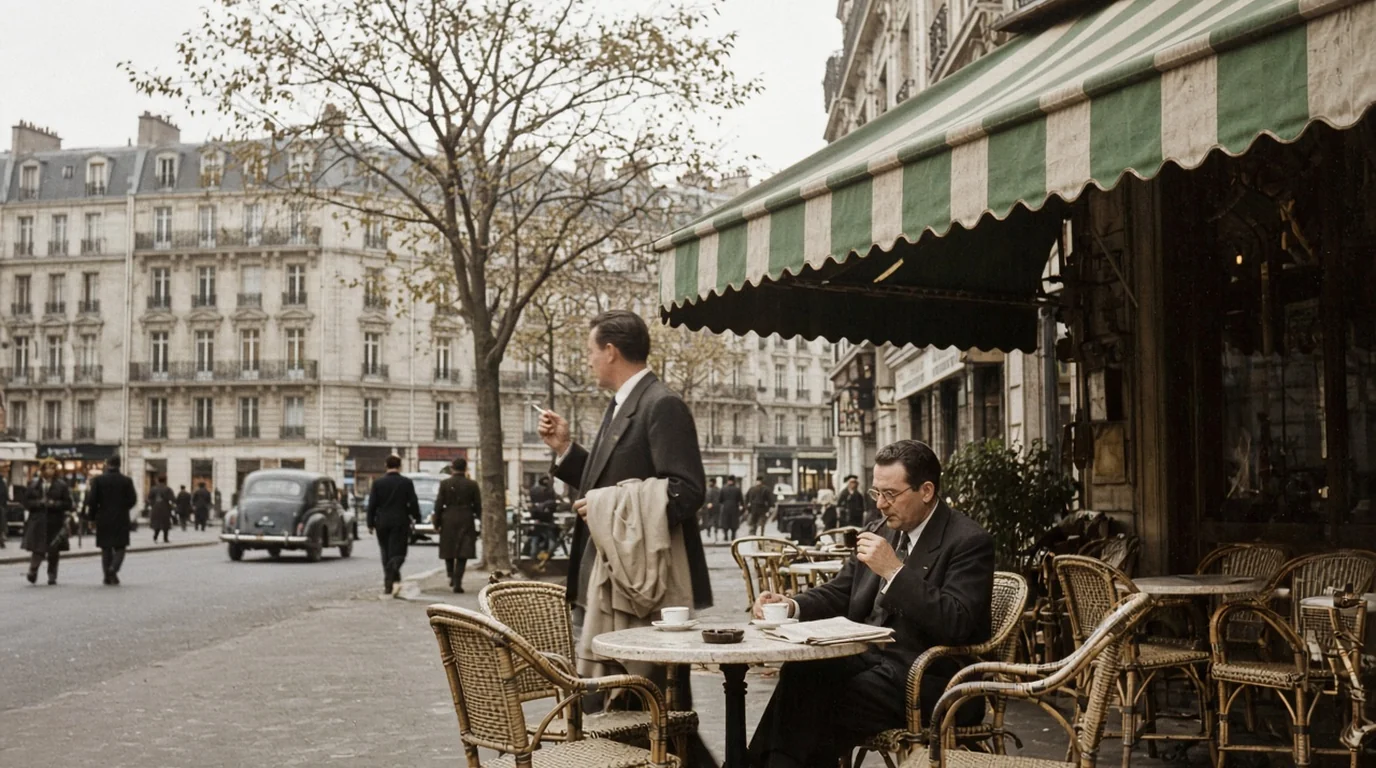
The meeting itself came in June of 1943, in occupied Paris, at the opening of Sartre’s play The Flies. As Simone de Beauvoir remembered it, a young man simply walked up and said, “I’m Camus,” and a friendship was struck almost at once. For the better part of a decade they were inseparable in the public imagination, the twin faces of a new philosophy that seemed to speak directly to a generation stunned by war and stripped of its old certainties. They drank together, argued together, championed each other’s work, and moved through the same brilliant circle that included Simone de Beauvoir. To the world outside France they were very nearly a single phenomenon, two names for the same audacious way of thinking about freedom, meaning, and the void.
Yet the ground beneath them was never as solid as it looked. The great dividing question of the postwar years was communism, and specifically the Soviet Union, and here the two men were temperamentally and morally worlds apart. Sartre, increasingly, held that a European intellectual could not condemn the Soviet experiment from the comfort of a Paris apartment without betraying the oppressed in whose name that experiment was carried out. To criticize the revolution too loudly was, in his view, to lend one’s voice to its enemies.
Camus could not accept this. He had come of age poor in colonial Algeria; he had lost none of his suspicion of grand systems that promised paradise at the price of present suffering. When evidence of the Soviet forced-labor camps could no longer be honestly denied, Camus refused every argument that weighed those camps against some imagined future good. A friendship can absorb a great deal of disagreement, but not, in the end, a disagreement about whether the machinery of terror can ever be justified. That was the crack. It only remained for a book to drive the wedge all the way in.
That book was The Rebel, Camus’s long philosophical essay published in 1951. In it he traced the history of rebellion and revolution across the modern age and arrived at a conclusion his old allies found intolerable: that the revolutionary spirit, once it convinces itself that history guarantees its triumph, slides with terrible ease into murder, and that the utopias of the twentieth century had been built on heaps of the dead. Camus set against this a rebellion with limits, a revolt that says no to oppression without granting itself the right to become an oppressor in turn. He would not exempt Soviet violence from the judgment he passed on all violence.
For Sartre and his circle this was not merely wrong; it was a betrayal, a comfortable moralism that served, whatever its author intended, the interests of the anti-communist West. The review, when it came, would be one of the most famous acts of intellectual demolition of the century, and the friendship would not survive it.
Sartre did not write the review himself. He assigned it to Francis Jeanson, a younger member of the Les Temps modernes circle, and Jeanson, whom Sartre expected to be the harshest reviewer available, delivered a long and savage notice. It accused Camus of moral posturing, of a lazy ignorance of Marx, and, most woundingly, of a kind of political cowardice dressed up as philosophy. It appeared in May of 1952 in the pages of the very journal that Sartre directed, and Camus read it as a knife handed to a subordinate so that the master’s own hands might stay clean.
He answered in August, in a long open letter addressed with cold formality not to Sartre by name but to “the Director of Les Temps modernes,” a pointed refusal to grant his old friend the intimacy of a first name. The letter was proud, aggrieved, and in places magnificent. Sartre’s reply, printed in the same issue alongside a second, even longer rejoinder from Jeanson, remains the more devastating of the two. It opened with a sentence whose warmth was the cruelest thing about it: “Our friendship was not easy, but I shall miss it,” in Chris Turner’s translation. What followed was a merciless dismantling of Camus the man and the thinker, an accusation of vanity, of intellectual laziness, of having become a hollow monument to his own virtue. The rupture was now complete and public. The issue sold out and had to be reprinted. Paris had its spectacle, and two friends had lost each other for good.
It would be a mistake to read all of this as mere temper. The quarrel was the outer weather of a genuine and profound philosophical division, and it is worth stating plainly, because it is the reason the argument still matters.
Sartre had come to believe that freedom is realized in history, through action, and often through the violence that action requires. To stand apart from the revolution in the name of one’s private conscience was, for him, a luxury and an evasion; the truly free man commits himself, takes sides, and accepts that clean hands are the sign of a man who has done nothing. Camus held the opposite. He believed that there are moral facts that no theory of history may override, that the murder of the innocent is not redeemed by the glorious society it is said to serve, and that a rebellion which grants itself unlimited means has already become the tyranny it set out to oppose. One man served the future; the other refused to sacrifice the present to it. Between those two positions there is no comfortable middle, and the twentieth century would spend the rest of its length discovering how much blood hung on the difference.
They never reconciled. For the remaining eight years of Camus’s life the two men did not speak, though they circled each other warily in the small world of French letters, and Simone de Beauvoir would settle her own scores against Camus in print. It is one of the quiet tragedies of modern intellectual history that the breach was never healed, that no late reconciliation softened the ending.
And then, on 4 January 1960, Camus was killed when the car in which he was a passenger, driven by Michel Gallimard, his publisher’s nephew, struck a tree near the village of Villeblevin. He was forty-six. The handwritten manuscript of his unfinished novel The First Man was recovered from the wreck, and an unused train ticket was found in his pocket. Sartre, who had spent years attacking him, wrote a tribute for France-Observateur that is among the most moving things he ever composed. “He and I had quarreled,” it begins in the English version published that February, and a quarrel, Sartre went on, is only “another way of living together.” He praised Camus’s “obstinate humanism, narrow and pure, austere and sensual,” and the way his old adversary had stood against the Machiavellians and the idol of realism, affirming the existence of the moral question at the heart of the age. In death, Sartre granted Camus the very thing he had denied him in life: the recognition that the man’s insistence on moral limits had been a form of courage, not cowardice. It was too late to be heard, but it was said. Years later, talking to the writer John Gerassi, Sartre would concede that the tribute contained “a little falsehood,” and in other moods he could be brutal about his old friend. The grief and the grudge, it seems, never quite separated.
Camus was forty-six when he died, and Sartre lived another twenty years, until April 1980. It is impossible not to wonder what those two decades would have done to the quarrel. What follows is speculation, and should be read as such, but it is speculation with a firm floor beneath it, because we know what Sartre did after 1960, and we know where Camus stood on almost every question that came next.
The first thing to say is that the early 1960s would almost certainly have driven them further apart, and the wedge would have been Algeria, the subject on which Camus was most vulnerable and Sartre most certain. Camus, born and raised in Algiers among the poor European settlers, had spent the war years trying to find a middle way: an appeal for a civilian truce in Algiers in January 1956, shouted down by extremists; a federal solution in his Algerian Chronicles of 1958; and, after the Nobel Prize in Stockholm in December 1957, a remark to an Algerian student that Le Monde reported as “Je crois à la justice, mais je défendrai ma mère avant la justice”: I believe in justice, but I will defend my mother before justice. Nine months after his death, Sartre signed the Manifesto of the 121, defending the right of young Frenchmen to refuse to fight in Algeria, and sent a letter of support to the trial of the network that had been smuggling money and papers for the Algerian rebels. The man who had organized that network was Francis Jeanson, the author of the review that ended the friendship. A year later Sartre wrote the preface to Frantz Fanon’s The Wretched of the Earth, arguing that colonial violence could be answered only by violence, and that “to shoot down a European is to kill two birds with one stone.” It is hard to imagine a sentence better designed to wound a man whose mother had spent her whole life in a working-class district of Algiers, and whose whole moral life rested on the refusal to kill civilians for a cause. Sartre’s apartment, meanwhile, was bombed twice by the far-right settlers’ army, in 1961 and early 1962. Had Camus lived, he would have been standing between the two sides of that violence, condemned by both, and Sartre would have had every reason to treat his silence or his nuance as complicity.
Then history began to turn, and it turned in Camus’s direction. Sartre had already broken with the French Communists over the Soviet invasion of Hungary in 1956, the same invasion Camus denounced in a speech that declared there could be no evolution in a totalitarian society; the two men condemned the same tanks without a word to each other. In 1968 Sartre called the Soviet invasion of Czechoslovakia a war crime. In 1969 he protested the expulsion of Alexander Solzhenitsyn from the Soviet Writers’ Union, and when The Gulag Archipelago appeared in Paris in 1974, it convinced a generation of young French intellectuals, the so-called new philosophers, that the camps Camus had refused to excuse were not an accident of Stalinism but its essence. They turned on Sartre. Camus, had he lived to see it, would have been sixty, and vindicated.
Would vindication have brought them together? There is one precedent that suggests it might, at least for an afternoon. Raymond Aron, Sartre’s closest friend from their student days, had broken with him even earlier and more bitterly, and for thirty years they did not speak. Then, in 1979, both men lent their names to a campaign to rescue the Vietnamese refugees fleeing by boat across the South China Sea, and on 20 June, at a press conference at the Hôtel Lutétia in Paris, Aron greeted the frail, nearly blind Sartre with the old student words, “Bonjour, mon petit camarade.” A few days later they went together to the Élysée Palace to put the case to the president. It was a reconciliation without a sequel; Aron himself remembered it as both silent and ostentatious. But it showed that Sartre, at the end, could set an old quarrel aside for a cause that both sides recognized as simple human rescue, which is exactly the kind of cause Camus had spent his life defending.
Sartre’s own late words point both ways. In a long interview for his seventieth birthday in 1975, he called Camus probably the last good friend he had. In conversations with Gerassi in the same years, he could be contemptuous of him. And in the interviews published as Hope Now just before his death, he spoke more of fraternity and ethics than of revolutionary violence, in a tone some of his old comrades barely recognized. The most likely answer, then, is neither a full reconciliation nor a deepening hatred, but something more human and more sad: a decade of bitter estrangement over Algeria, followed in old age by a cautious respect, perhaps a handshake at some public occasion, perhaps a sentence in an interview, but never again the friendship of the cafés. The scholar Ronald Aronson has suggested that, without the Cold War, they might have remained friends. The Cold War did not end until after both were dead. The argument it forced on them had not finished either.
Readers have argued this point for seventy years, and it would be dishonest to pretend the matter is settled. Those who side with Sartre point out that history does force terrible choices, that neutrality in the face of oppression is itself a choice, and that Camus’s moral purity could look, from certain angles, like a refusal to dirty his hands in the real struggles of his time. Those who side with Camus answer that the century proved him right in the most literal way possible, that the revolutions which promised paradise delivered the gulag and the killing field, and that his warning against the murderous logic of historical necessity reads now less like timidity than like prophecy.
The honest reader need not choose too quickly. The argument endures precisely because both men touched something true, and because the tension between them, between commitment and conscience, between changing the world and refusing to become a monster in the changing of it, is not a problem to be solved but a permanent condition of moral life. That is why the quarrel outlived the men who had it.
The break between Camus and Sartre is usually filed away as a footnote, a piece of literary scandal from a vanished Paris. It deserves better. It was the moment existentialism discovered that it contained two incompatible souls, and it forced into the open a question that no serious person can finally avoid: what are we permitted to do in the name of a better world, and what must we refuse no matter the cost?
Camus, who once asked us to imagine Sisyphus happy, spent his last years insisting that some prices are too high to pay, that the rock must be pushed without crushing anyone beneath it. Sartre believed that the man who will not risk his innocence has forfeited his relevance. Neither ever persuaded the other, and neither has ever quite persuaded posterity. The friendship was lost. The argument was not, and it belongs now to anyone willing to take it up.
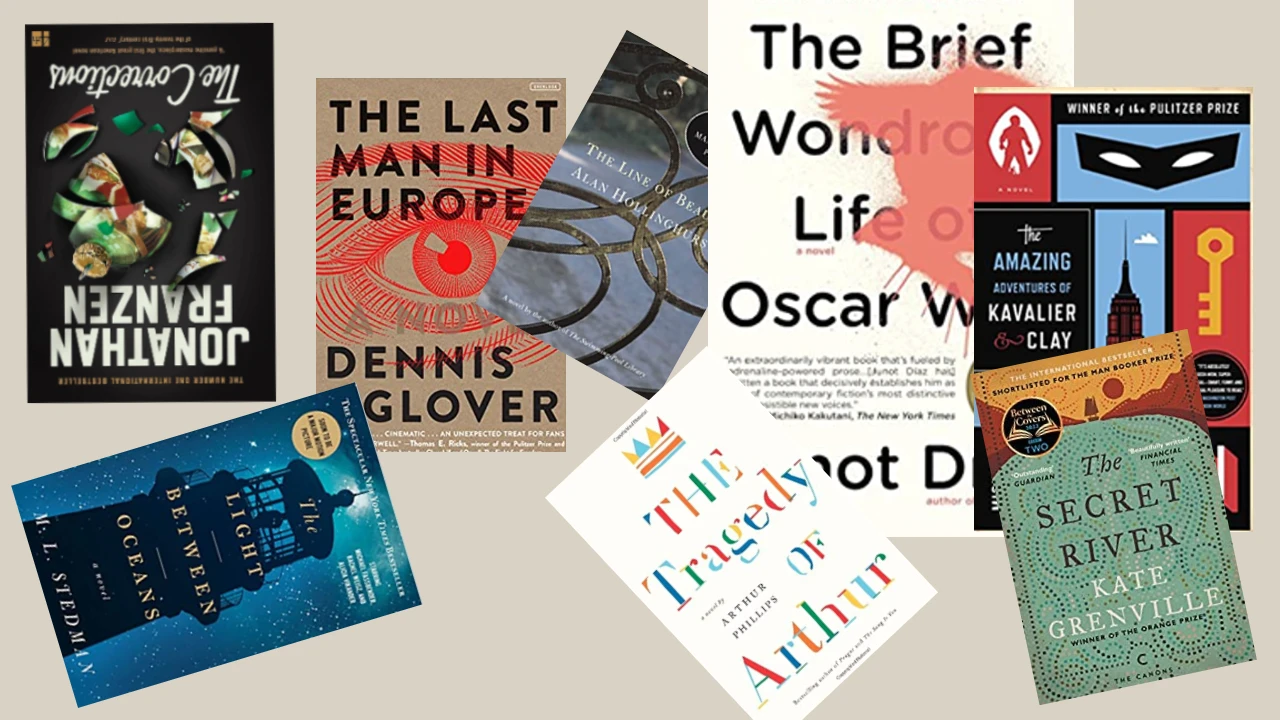
If you want to follow the thread further, begin with the book that lit the fuse, and with Camus’s earlier meditation on meaning and revolt in The Myth of Sisyphus. From there, the wider tradition opens out in our guide to the best existentialism books to read after Camus.