Newsletter Subscribe
Enter your email address below and subscribe to our newsletter

Spanish is one of the great literary languages, and it holds two capitals at once. It gave the world the first modern novel and, four centuries later, the most influential novel of the twentieth century. To read across it is to travel between two continents that share a tongue but not a history.
A book written in Bogota or Gwangju or Cairo does not stay there. Its second life, the life it leads beyond the borders of its own language, is what we mean by world literature, and the country it opens is far larger than any national map suggests.

One writer's name became an adjective because he mapped a nightmare the whole modern world would come to share. The novels gathered here are the great inheritors of that vision, from a fort awaiting an enemy that never comes to a ministry that harvests a nation's dreams. Each shows the kafkaesque wearing a different face, in a different tongue.
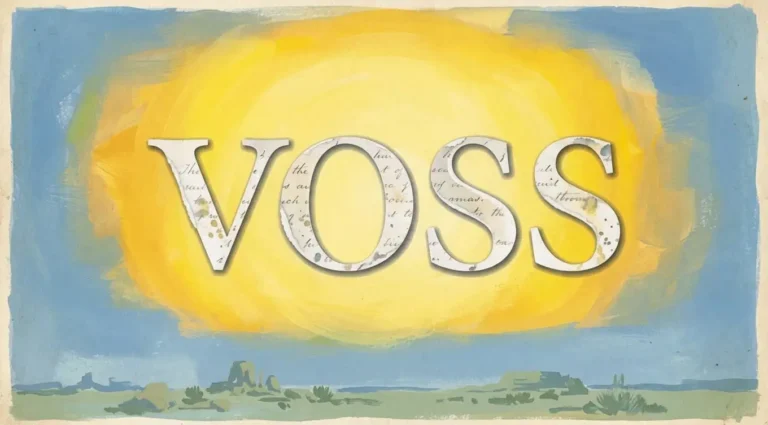
A man sets out to walk across a continent, and the country he is really crossing is himself. Patrick White's Voss turns an expedition into a test of the soul, where the will to conquer and the willingness to be humbled prove to be the same motion. Voss is a remarkable book.
A man reaches for a stone on the beach and cannot bring himself to touch it. That small failure is the beginning of Roquentin's nausea, the dawning horror at the sheer, unjustified thereness of everything that exists. Sartre's first novel turns a metaphysical shudder into a story, and it remains the truest door into existentialism there is.
A friendship can end in a single published sentence and never be repaired. A love that never quite happened can shadow a woman for the rest of her life. Between these two fates lies the quiet art by which Beauvoir shaped what the world was allowed to know.

A phrase escaped this novel and entered every language, naming the trap that locks the moment you reach for the handle. Beneath Heller's terrible comedy of preening colonels and lethal paperwork lies a single unbearable truth about how institutions spend a human life. This is the real Catch-22 meaning, and why the book has never aged.
Most 12th grade reading lists out there are predictable and dull, recycling the same ten or fifteen titles without much thought. This guide takes a different approach. Instead of sticking to a narrow Western canon, we’ve built a collection of books that truly changed literature and thought across continents; from Dostoevsky’s Crime and Punishment in Russia to Cortázar’s Hopscotch in Argentina, from Achebe’s Things Fall Apart in Nigeria to Kawabata’s Snow Country in Japan. This isn’t about showing off on a bookshelf, it’s about diving into books that challenge and expand how we see the world.
A nameless, spiteful man speaks to us from a cellar in Petersburg, and insists on a freedom so absolute that he will choose his own suffering rather than let reason dictate his happiness. Dostoevsky's short, savage confession is where the modern anti-hero is born, and where existentialism first finds its voice, decades before it had a name.
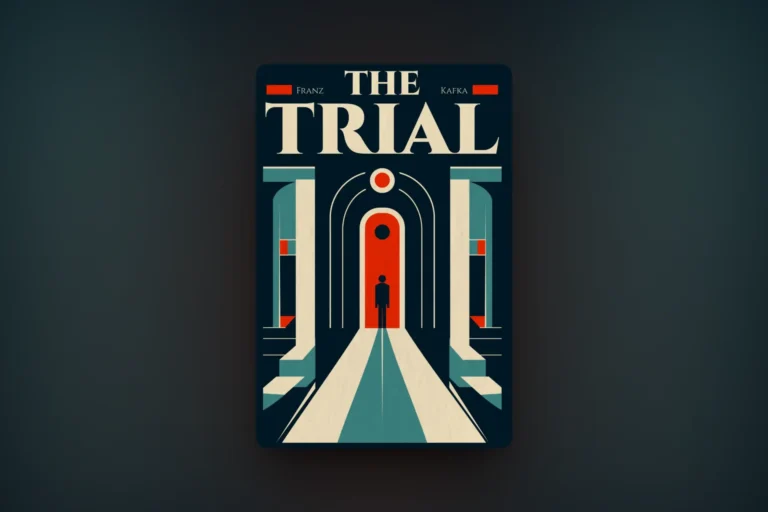
One ordinary morning, a man is arrested for a crime no one will name, and the deepest horror of his ordeal is that some part of him comes to believe he is guilty. Kafka's unfinished masterpiece is the great parable of modern guilt, of a bureaucracy without a face and a law without a door, and it has given its author's name to a whole condition of the modern soul.
If the Pulitzer is decided in a boardroom, the National Book Award is decided in an argument among writers, and it shows. Its winners read like an alternative history of the American novel, drawn by the people who make them.